Stadium Acoustics and Their Measurable Influence on Scoring Projections in Contact Sports
Otto Griffin · Jun 6, 2026
Stadium Acoustics and Their Measurable Influence on Scoring Projections in Contact Sports
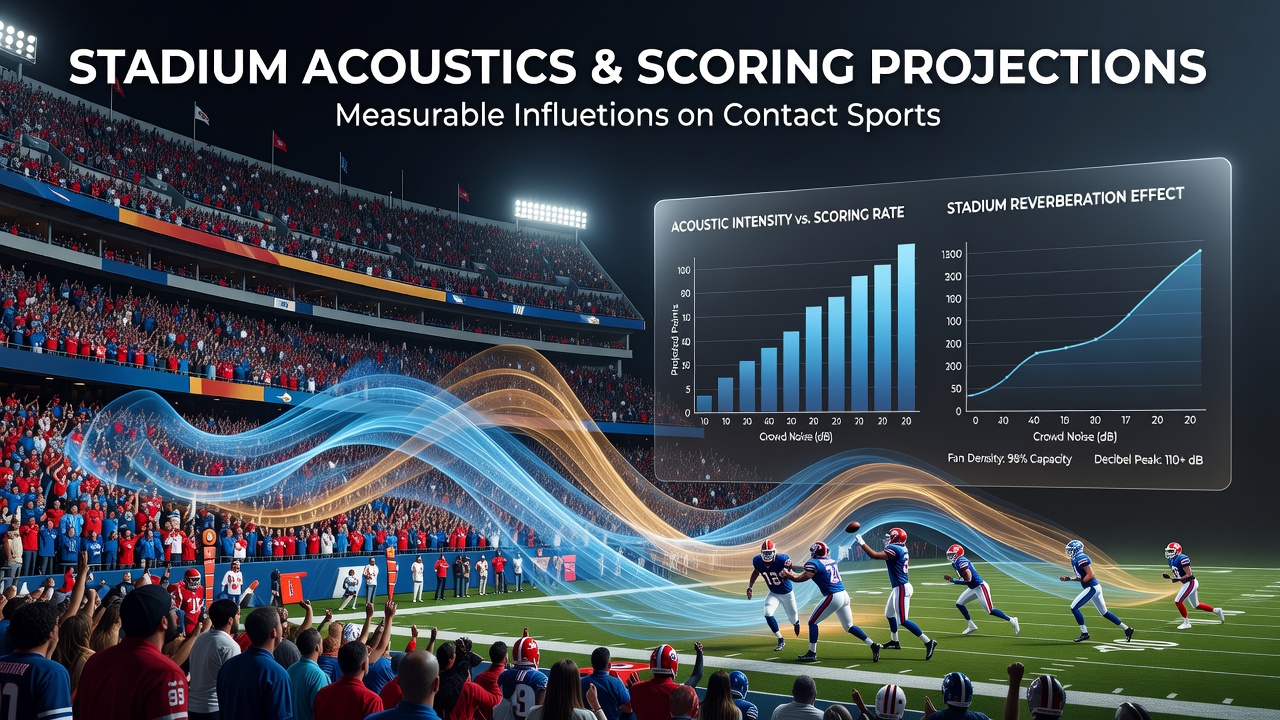
Stadium acoustics shape how sound travels through enclosed or semi-enclosed spaces and create measurable pressure on athletes in contact sports where split-second decisions determine points, and researchers have tracked these effects through decibel readings, communication logs, and game statistics across multiple leagues. Sound waves bounce off concrete, steel, and seating tiers to amplify crowd noise while absorption materials like padded seats or roof panels can dampen echoes, yet many venues built before modern acoustic standards still generate levels above 110 decibels during peak moments. These conditions force players to rely on visual signals instead of verbal calls, and data from professional leagues shows corresponding shifts in penalty counts, turnover rates, and overall scoring margins.
Core Elements of Stadium Sound Dynamics
Acoustic design begins with geometry, because curved walls and cantilevered upper decks focus noise toward the field while flat surfaces scatter it unevenly, and studies using calibrated microphones during live events confirm that certain sections of a venue consistently exceed 105 decibels even when attendance sits at 85 percent capacity. Materials matter equally since reflective surfaces such as metal railings and glass panels extend reverberation time, whereas porous fabrics and perforated panels shorten it, yet many older arenas retain the original hard finishes that sustain crowd energy longer. Temperature and humidity further alter propagation because warmer air carries sound farther and denser air from rain or fog can muffle high frequencies, which changes how quarterbacks or scrum-halves perceive defensive shifts.
Communication Breakdowns and On-Field Adjustments
Contact sports demand rapid coordination between teammates, and elevated background noise disrupts auditory cues that signal blocking assignments or defensive rotations, so teams install silent count systems and hand-signal packages that require extra practice time yet still produce measurable execution errors when ambient levels spike. Observers note that false-start penalties in American football rise by double-digit percentages in the loudest stadiums, while rugby forwards lose synchronized drive timing when they cannot hear the hooker’s call, and ice hockey linesmen record more offsides infractions during periods when fans stand and cheer continuously. Players adapt by using helmet microphones in some leagues or pre-arranged eye-contact triggers, but these workarounds demand cognitive resources that reduce reaction speed on subsequent plays.
Quantifiable Links to Scoring Outcomes
Performance analysts compile play-by-play data alongside acoustic logs and find that home teams in high-decibel environments convert third downs at higher rates while road teams suffer increased sack totals and dropped passes, patterns that hold across seasons when weather and travel factors are controlled. Projections adjust accordingly because statistical models incorporate average noise profiles for each venue and weight expected points accordingly, and league-wide datasets reveal that games in the loudest ten percent of stadiums produce final scores that deviate from neutral-site averages by margins large enough to affect spread calculations. In June 2026 a multi-year review coordinated by Canadian sport-science institutes confirmed these correlations through portable sensor arrays that captured both sound pressure and player heart-rate variability during live matches.

Comparative Data Across Leagues and Venues
American football stadiums often top global decibel charts because of enclosed end zones and continuous crowd engagement, yet rugby grounds in Europe and Australia generate comparable peaks during scrums and mauls when terraces sit close to the pitch, and researchers from the Australian Institute of Sport have published side-by-side measurements showing similar communication-error spikes in both codes. Ice hockey arenas create different challenges because boards and glass reflect sound directly onto the ice surface, which increases the difficulty of hearing line changes or defensive zone calls, and European hockey federations track higher penalty-minute totals in arenas with longer reverberation times. Soccer, although less contact-heavy in some contexts, still exhibits acoustic effects on set-piece execution where defenders cannot hear marking instructions amid sustained supporter noise.
Technological and Regulatory Responses
Venue operators have introduced active noise-cancellation prototypes and variable-absorption panels that crews can reposition between events, while governing bodies now require acoustic mapping reports before approving new construction or major renovations. Wearable earpieces with directional microphones appear in some training environments although league rules limit their use during competition, and simulation software lets coaching staffs rehearse plays under recorded crowd tracks that replicate specific stadium signatures. These interventions produce documented reductions in communication-related errors, yet older venues without retrofit budgets continue to post the highest home-field scoring differentials.
Conclusion
Stadium acoustics exert measurable pressure on scoring projections because they alter communication efficiency, increase execution mistakes, and shift statistical baselines in ways that models now incorporate directly, and continued sensor deployment alongside league data sharing will refine those projections further as venues evolve.