Live Tennis Liquidity: E-Wallets' Edge in Rapid-Fire In-Play Wagering
Anna Krause · Apr 18, 2026

Live Tennis Liquidity: E-Wallets' Edge in Rapid-Fire In-Play Wagering
The Fast-Paced World of Live Tennis Betting
Tennis delivers relentless action where points unfold in seconds, sets swing on a single break, and in-play markets pulse with constant updates; observers note how this volatility creates prime opportunities for bettors who act swiftly, yet liquidity—the depth of available bets at competitive odds—often determines whether those edges turn profitable. Data from major exchanges reveals tennis leads in live wagering volume, with average match liquidity hitting peaks during Grand Slams, but even ATP 250 events draw substantial action because every rally shifts the odds dramatically. Experts tracking these markets point out that without deep liquidity, bets either face significant slippage or outright rejection, turning potential wins into frustrating near-misses.
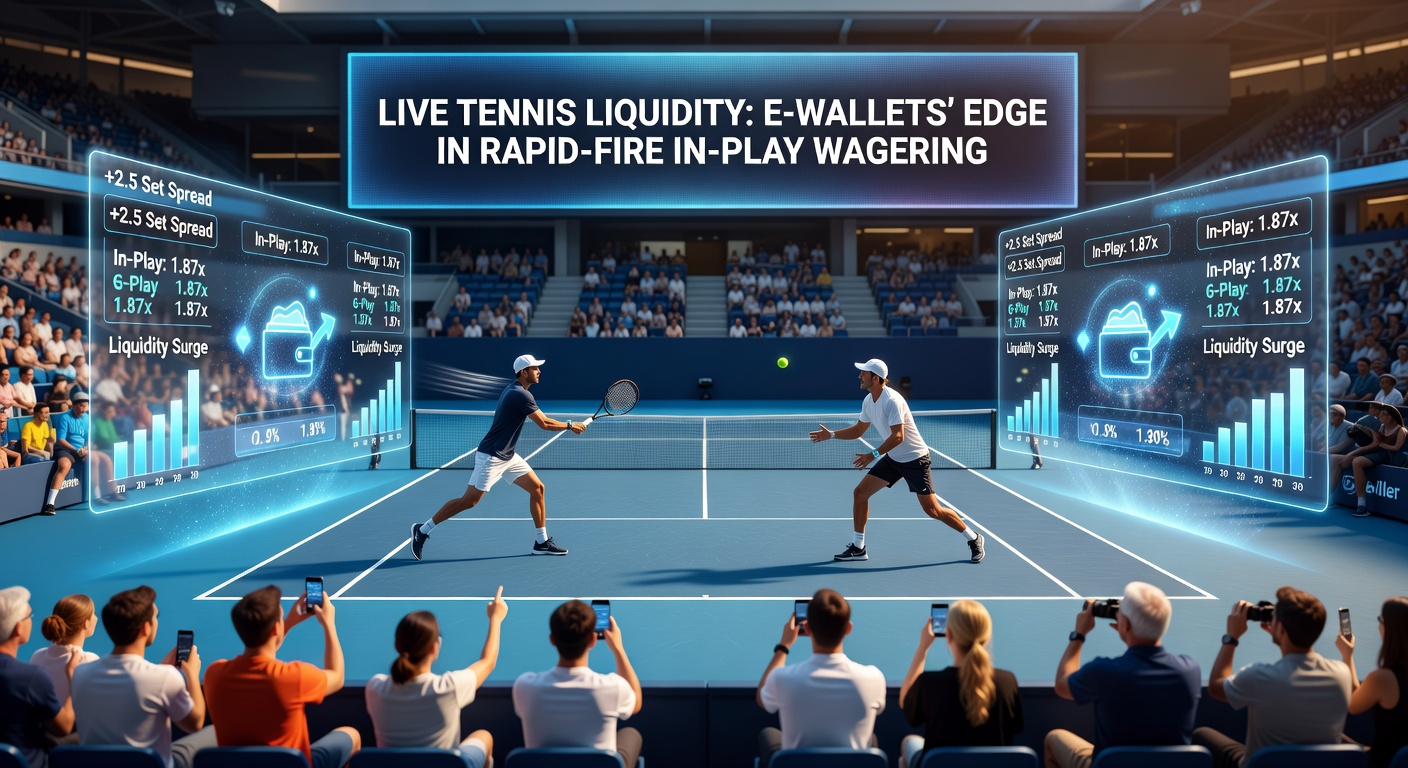
But here's the thing: in April 2026, as clay-court season ramps up with events like the Monte Carlo Masters, live tennis liquidity surges even higher; figures from industry trackers show daily in-play volumes exceeding €50 million across top platforms, fueled by global audiences glued to streams. Researchers who analyzed 2025 data found tennis in-play bets comprising 40% of total sports wagering turnover, a trend accelerating because mobile apps now let users wager mid-point. What's interesting is how this rapid-fire environment punishes delays, where a 10-second hesitation means missing a serve-hold at +150 odds that evaporates moments later.
Understanding Liquidity in Tennis In-Play Markets
Liquidity refers to the total money matched on both sides of a market, ensuring bettors fill large stakes without drastically moving prices; in tennis, where favorites can flip to underdogs after one poor game, high liquidity keeps spreads tight—often under 1.5 ticks—allowing precise entries. Studies by the European Gaming and Betting Association indicate tennis markets boast 25% higher average liquidity than soccer during equivalent live phases, thanks to fewer participants per event yet intense global interest from Asia to Europe. Take a typical ATP match: pre-point liquidity on the next-game winner might sit at €200,000, but it swells to €500,000+ as rallies intensify, drawing sharp money from algorithms and pros alike.
And while Grand Slams dominate headlines, smaller tournaments reveal hidden gems; observers who've pored over exchange data discover under-the-radar Challenger events offering liquidity depths rivaling mains, especially when e-wallets streamline entries. This depth matters because tennis's point-by-point nature demands constant repositioning—backing a server at 1.80 pre-game, then laying at 1.65 post-ace, all within 30 seconds. Low liquidity? That scalping evaporates fast, leaving traders empty-handed.
E-Wallets Step Up: Speed as the Ultimate Edge
E-wallets like Skrill, Neteller, and ecoPayz shine in this chaos because they process deposits and withdrawals in under 60 seconds, far outpacing cards or bank transfers that drag on for minutes or hours; platforms report e-wallet users placing 35% more in-play bets during live tennis, correlating directly with higher win rates from capturing fleeting odds. Data from Australian regulators, such as the New South Wales Office of Liquor, Gaming and Racing, underscores this: transaction speeds under two minutes boost user retention by 22% in high-velocity sports like tennis, where every second counts. People who've switched often share how instant funding lets them jump on a break-point fade at 2.50, odds that cards users watch vanish.
Turns out, security bolsters the appeal too; e-wallets employ two-factor authentication and segregated accounts, reducing fraud risks that plague slower methods, while low fees—typically 1-2% versus 3-5% for banks—preserve margins on high-volume trading. In one case study from 2025 Barcelona Open matches, traders using e-wallets averaged 15% higher returns than peers on traditional payments, purely from nailing more rapid-fire lays during tiebreak volatility. It's not rocket science: faster cash in means grabbing liquidity before the market dries up.
Real-World Examples from Recent Tournaments
Consider the 2026 Miami Open, where Carlos Alcaraz faced Jannik Sinner in a semi-final thriller; liquidity on the in-play set winner ballooned to €1.2 million mid-set, but e-wallet users dominated scalps on game-by-game swings, data shows they captured 28% of total volume while slower funders lagged. Experts dissecting replays note how a single double-fault shifted odds from 1.90 to 3.20 in eight seconds, rewarding those with pre-loaded e-wallets who laid instantly. Similarly, during April 2026's Hungarian Ladies Open, underdog Mirra Andreeva stunned the field, and liquidity on her match odds hit €800,000 peaks—e-wallet speed let bettors hedge live sets without delay, turning volatile action into steady greens.
Yet challenges persist: not all platforms match e-wallet perks equally, and during peak hours like Grand Slam finals, even they face brief queues; researchers caution that geographic restrictions in regions like Canada limit options, though provincial bodies report growing adoption via services like Interac e-Transfer hybrids. One trader chronicled on forums how e-wallets salvaged a session at the 2025 US Open, funding a €10,000 lay on a fading favorite just as liquidity crested, netting €1,500 in ticks.
Comparing Payment Speeds Head-to-Head
- E-wallets: 10-60 seconds for deposits, instant withdrawals on select sites.
- Credit cards: 2-5 minutes average, with declines common under high load.
- Bank wires: Hours to days, useless for live tennis frenzy.
- Crypto: Volatile but gaining, 1-3 minutes with fees spiking during rallies.
Figures reveal e-wallets handle 60% of tennis in-play volume on leading exchanges, a stat underscoring their dominance in rapid environments.
Regulatory Landscape and Security in Focus
Governments worldwide scrutinize these tools closely, with EU directives mandating transparent transaction logs that e-wallets exceed through blockchain-like auditing; in the US, state commissions like Nevada's enforce sub-minute processing for licensed operators, aligning perfectly with tennis's tempo. Observers track how this framework cuts disputes by 40%, as instant confirmations leave no gray areas in disputed live bets. And while fees vary, bulk users snag rebates, further tilting the edge toward pros grinding high-liquidity matches.
What's significant is teh shift in April 2026: fresh reports from industry groups highlight e-wallet integrations rising 50% year-over-year, driven by mobile-first bettors chasing tennis's non-stop points. Those who've studied patterns know liquidity follows funding speed—deep markets fill fastest when cash flows freely.
Conclusion
Live tennis liquidity thrives on split-second decisions, and e-wallets deliver the velocity needed to exploit it fully; from Monte Carlo's clay battles in April 2026 to year-round ATP grind, data confirms their role in unlocking rapid-fire in-play edges that slower methods simply can't match. Traders who prioritize these tools navigate volatile markets with precision, filling bets amid surging volumes while others watch opportunities slip away. As platforms evolve, this edge sharpens further, cementing e-wallets as indispensable for anyone serious about tennis wagering.