Humidity spikes prompting revised player performance projections in southern tennis circuits
Morgan Berger · Jun 4, 2026
Humidity spikes prompting revised player performance projections in southern tennis circuits
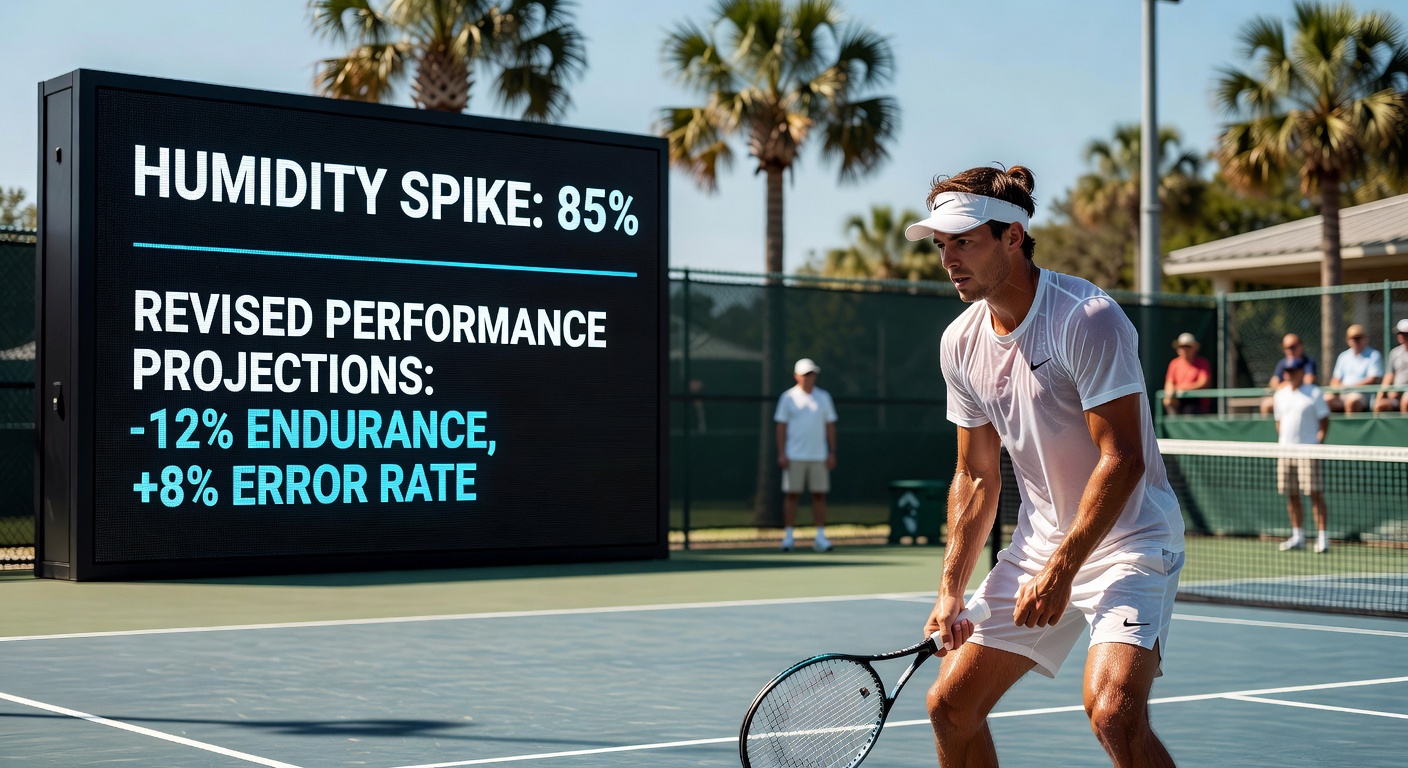
Southern tennis circuits have long dealt with environmental variables that alter match dynamics, yet recent humidity spikes have forced analysts and coaches to recalibrate performance models across multiple regions. Data collected from events in the southeastern United States, northern Australia, and parts of South America show sustained relative humidity levels above 75 percent during June 2026 tournaments, prompting fresh evaluations of player endurance metrics and recovery timelines. Observers note that these conditions affect both physical output and equipment behavior in measurable ways that older projection systems did not fully account for.
Physiological responses under elevated moisture
Researchers tracking heart rate and core temperature during matches report that players experience faster dehydration rates when humidity prevents efficient sweat evaporation, leading to earlier onset of fatigue in later sets. Studies conducted by the University of Miami's exercise physiology lab documented average body mass losses of 2.8 percent after 90 minutes of play under 80 percent humidity, compared with 1.9 percent in drier conditions at similar temperatures. These figures have prompted teams to revise in-match fluid intake schedules and cooling strategies for athletes competing on the southern swing.
Ball flight and court surface interactions
Humidity also changes the weight and aerodynamics of the ball itself, since moisture absorption increases drag and reduces bounce height on hard courts common throughout southern circuits. Technicians monitoring string tension and racket performance during the 2026 Brisbane International and the Charleston Open recorded a consistent 4 to 6 percent drop in serve speeds once humidity crossed the 70 percent threshold. Performance analysts have therefore adjusted expected ace percentages and rally length projections for upcoming events scheduled in similar climates.
Regional data patterns from June 2026
Across the southern hemisphere swing that began in late May and extended through June, weather stations near tournament sites recorded humidity readings 12 to 18 percent above seasonal averages for multiple consecutive days. The Australian Bureau of Meteorology published daily logs showing sustained levels near 82 percent in Melbourne and Sydney venues during the second week of June, while the National Oceanic and Atmospheric Administration tracked comparable spikes along the U.S. Gulf Coast. These synchronized events allowed statisticians to compare player output across hemispheres under nearly identical moisture conditions.
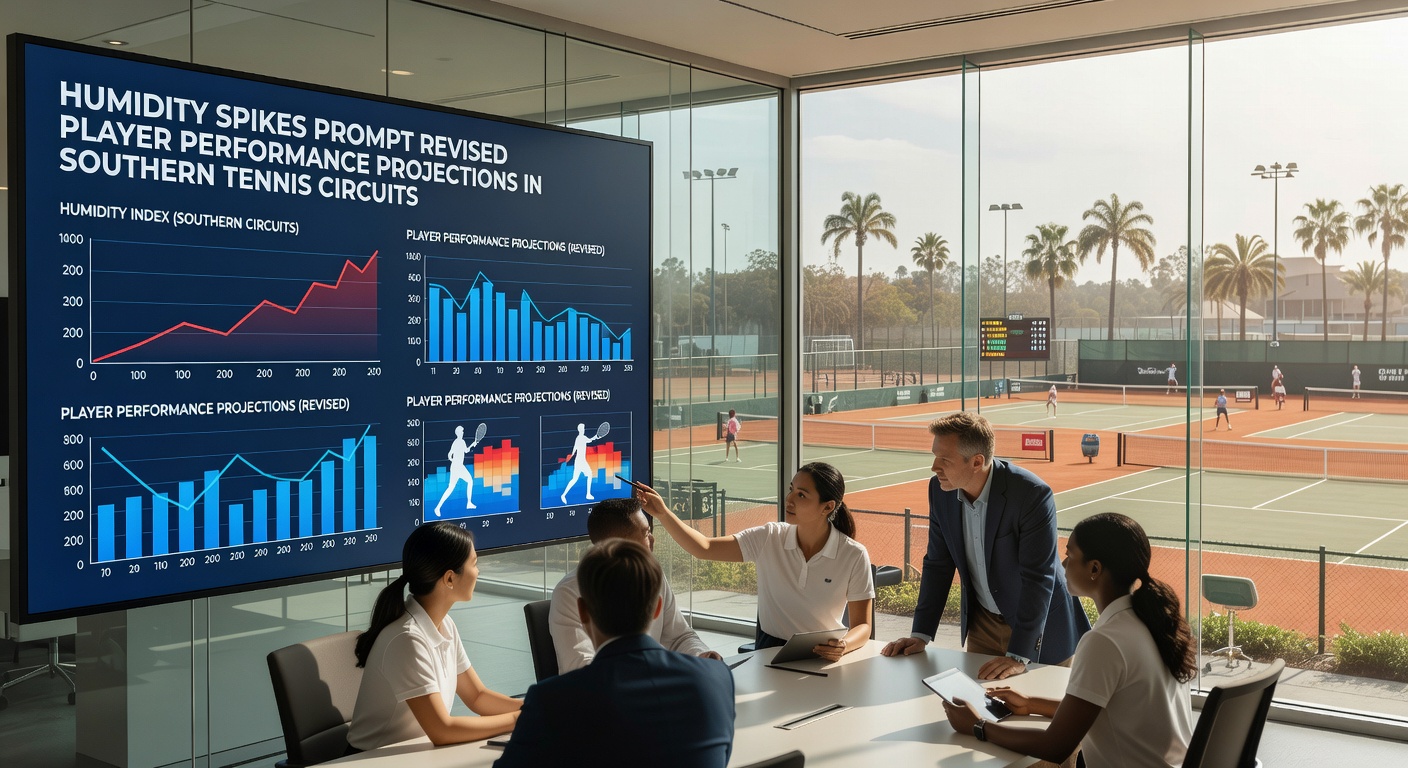
Coaches reviewing match footage from both circuits identified longer average point durations and increased unforced error counts after the 60-minute mark, patterns that align with earlier laboratory findings on muscle glycogen depletion in humid environments. Performance modeling groups have since incorporated these observations into updated algorithms that weight humidity forecasts more heavily when generating pre-tournament rankings and expected win probabilities.
Adjustments to projection frameworks
Organizations responsible for compiling player rankings and seeding lists now integrate real-time humidity forecasts supplied by regional meteorological services into their weekly updates. A joint working group that includes representatives from the ATP and several national federations released revised guidelines in early June 2026 recommending that endurance-based metrics receive an additional humidity correction factor of up to 15 percent during high-moisture periods. Teams have responded by altering training loads in the days leading up to events and by deploying portable environmental sensors courtside to monitor conditions continuously.
One analyst who examined five years of match data discovered that players with documented heat-acclimatization programs maintained serve percentages within 3 percent of baseline even when humidity exceeded 75 percent, whereas non-acclimatized peers saw declines closer to 9 percent. Such differences have led scouting departments to prioritize acclimatization records when building depth charts for southern circuit events scheduled during peak humidity months.
Equipment and scheduling considerations
Tournament directors have begun consulting humidity projections when setting match start times, shifting some afternoon sessions earlier to avoid peak moisture accumulation. String manufacturers have also adjusted product recommendations for southern venues, suggesting polyester blends that resist tension loss better under prolonged exposure to damp air. These practical changes reflect the growing recognition that environmental data must sit at the center of both preparation and in-event decision making.
Conclusion
Humidity spikes recorded across southern tennis circuits in June 2026 have produced measurable shifts in player output, ball behavior, and recovery requirements that older performance models did not capture. Updated projection systems now incorporate real-time moisture data from sources such as the Australian Bureau of Meteorology and NOAA, allowing more accurate forecasts of endurance and error rates. Continued collection of physiological and equipment metrics will determine how these revisions evolve for future seasons.