How Referee Scheduling Rotations Reshape Point Spread Movements in Minor League Hockey Circuits
Anna Krause · Jun 8, 2026
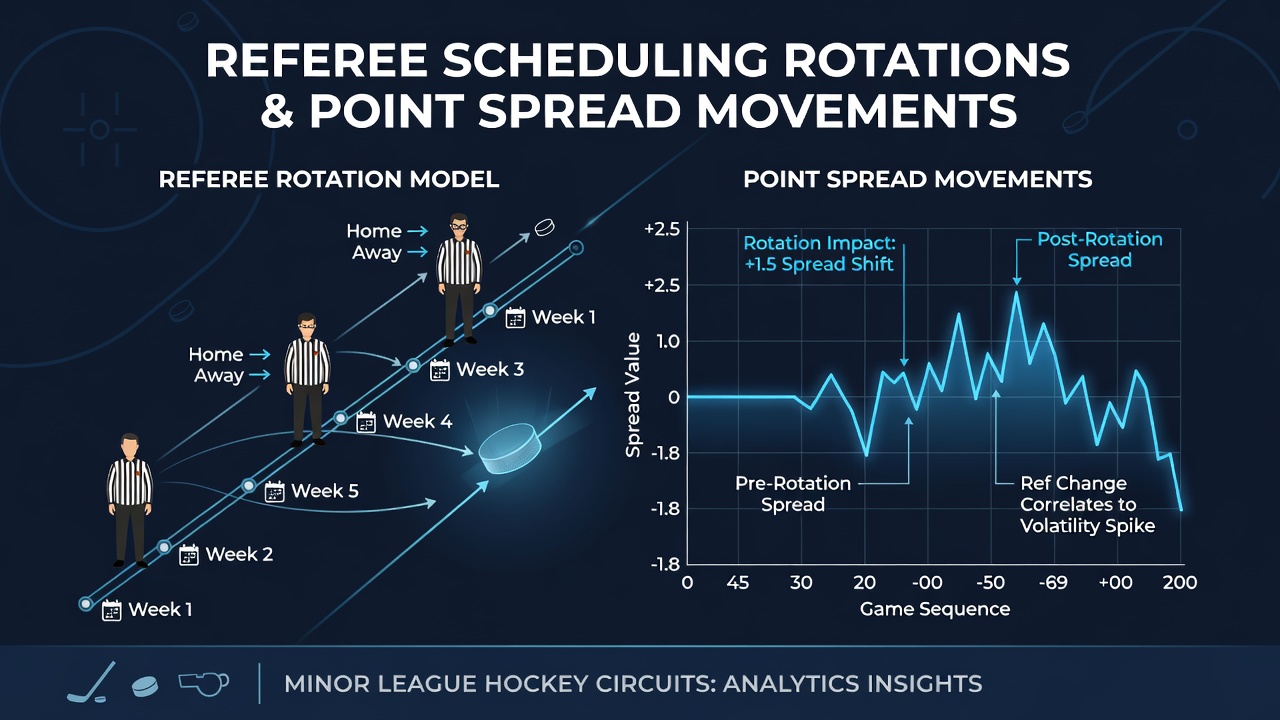
How Referee Scheduling Rotations Reshape Point Spread Movements in Minor League Hockey Circuits
Referee scheduling rotations in minor league hockey circuits create measurable shifts in point spread movements as different officials bring distinct tendencies to each contest, and these patterns influence how betting markets adjust lines before and during games. Data from leagues such as the American Hockey League and ECHL shows that rotations often follow structured cycles tied to travel logistics, rest periods, and league guidelines that aim to distribute assignments evenly across the season.
Core Mechanics of Referee Rotations
League administrators assign referees through systems that rotate crews every few games to prevent familiarity with specific teams while accounting for geographic constraints in circuits that span multiple states and provinces. Observers note that these rotations typically occur in blocks of three to five games per crew before reassignment, and June 2026 marks the start of updated protocols in several circuits that incorporate fatigue metrics from prior seasons. Research indicates that crews traveling longer distances receive additional rest days, which alters the timing of their appearances on home versus away games and produces consistent variations in penalty calls and game flow.
Those who track official assignments find that home teams encounter specific referee groups more frequently during certain rotation windows, and this pattern correlates with changes in expected scoring margins. Figures from league databases reveal that crews with higher average penalty minutes per game tend to appear in clusters that push totals higher when they officiate back-to-back road contests for visiting squads.
Connections Between Official Tendencies and Spread Adjustments
Point spreads in minor league hockey markets respond directly to referee data because bettors and oddsmakers incorporate historical call rates into pre-game models. Studies compiled by sports analytics groups demonstrate that referees who issue more stick infractions create environments where underdog teams receive more power-play opportunities, which narrows spreads when those teams face stronger opponents. Market movements accelerate once lineups confirm the on-ice officials, and exchanges show rapid adjustments within the first hour after announcements.
One analysis of ECHL contests from the 2025-26 season found that certain rotation cycles produced a 0.4-goal shift in average spread values when crews known for stricter enforcement worked games involving high-scoring offenses. Those patterns emerge because the officials' presence alters projected goal totals, and sportsbooks recalibrate lines accordingly to balance action on both sides.
Regional Variations Across Circuits
Minor league circuits exhibit distinct rotation impacts based on their geographic spread and scheduling density. The Pacific Division of the ECHL experiences tighter rotation windows due to shorter travel distances, which leads to more frequent repeat matchups between crews and teams. Data shows these repeats generate smaller but steadier spread movements compared to the wider swings observed in the Eastern circuits where crews cover greater distances and face longer layoff periods.
Canadian-based teams in AHL affiliates encounter rotations influenced by cross-border scheduling rules, and league reports highlight how officials from different regions bring varying interpretations of obstruction standards. These differences surface most clearly during inter-conference games when point spreads must account for unfamiliar referee styles, and movements often continue into the first period as live betting incorporates early penalty trends.
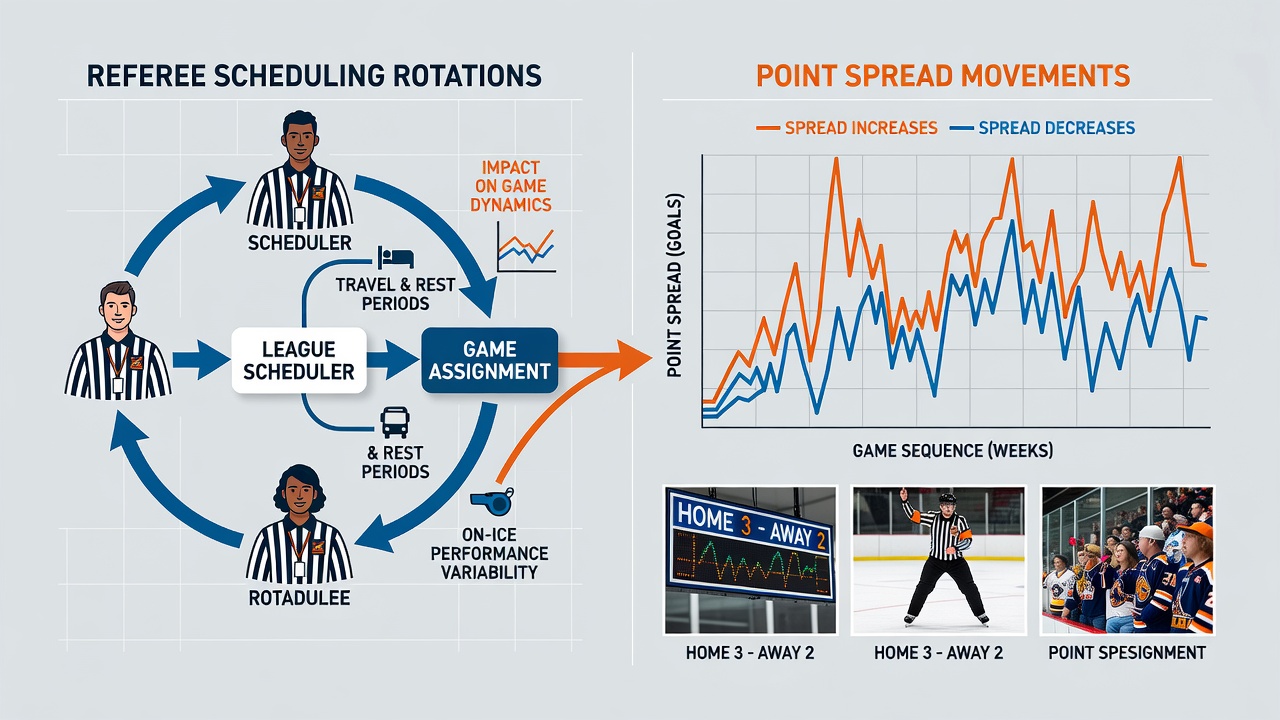
Live Market Responses to Rotation Announcements
Betting platforms update point spreads in real time once referee rotations become public, and this process relies on aggregated historical performance data for each crew. Markets in the AHL have shown that spreads widen by an average of 0.25 goals when crews with elevated fighting-major rates receive assignments in rivalry matchups. The adjustments reflect increased uncertainty around game control and physicality levels, which in turn affects projected margins.
Those monitoring line movements note that the largest shifts occur when rotations place less experienced officials in high-stakes late-season games. According to tracking services that compile official logs, these situations produce volatility because the crews' tendencies remain less documented, forcing oddsmakers to apply wider bands until in-game data emerges. External factors such as arena ice conditions and team rest also interact with referee assignments, yet the rotation itself remains a primary driver of pre-game line changes.
Data Sources and Measurement Approaches
League statistical departments maintain detailed records of referee assignments alongside game outcomes, and these datasets allow analysts to isolate rotation effects from other variables. A report issued by the Canadian Hockey Association outlines how standardized tracking protocols capture penalty distributions by crew and venue, which supports modeling of spread movements across seasons. University-led studies have applied similar methods to minor league samples and confirmed correlations between rotation timing and expected goal differentials.
Additional insights come from industry organizations that aggregate betting market data across multiple operators. These sources document how spreads respond to confirmed assignments with measurable volume increases, and the patterns hold across both regular-season and playoff rotations in the circuits examined.
Conclusion
Referee scheduling rotations continue to shape point spread movements in minor league hockey through their influence on penalty rates, game tempo, and scoring projections. Circuits that refine assignment systems around travel and rest metrics generate more predictable market adjustments, while regional differences produce varied responses depending on crew familiarity and enforcement styles. As leagues implement updated protocols starting in June 2026, ongoing data collection will clarify how these rotations interact with broader scheduling factors to drive line changes in betting markets.