Genetic Insights Reshaping Individual Performance Forecasts in Professional Team Competitions
Ines Wagner · Aug 24, 2026
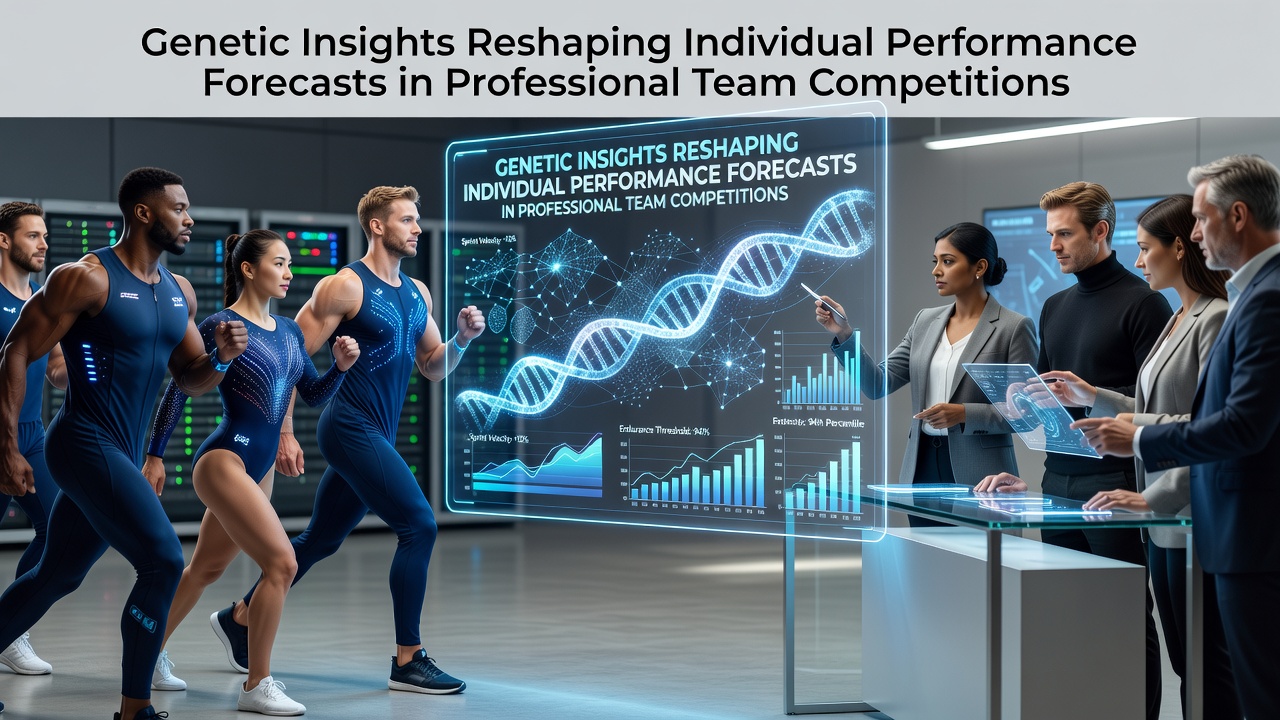
Genetic Insights Reshaping Individual Performance Forecasts in Professional Team Competitions
Advances in genomic sequencing have given researchers clearer ways to connect specific gene variants with physical traits that matter in team sports, and data from multiple studies now feed into performance models used by professional organizations. Teams in leagues across Europe, North America, and Australia have begun incorporating these markers alongside traditional scouting and training data, which allows analysts to adjust forecasts for how an athlete might handle high-intensity periods or recover between matches. The process relies on large cohort studies that track thousands of participants, and results show consistent associations between certain alleles and endurance capacity or power output, though environmental factors still dominate overall outcomes.
Key Genetic Markers Under Study
Researchers have focused on variants such as ACTN3 and ACE because they correlate with muscle fiber composition, and evidence from controlled trials indicates that individuals carrying the R allele of ACTN3 tend to show higher rates of fast-twitch fiber expression. In team contexts like soccer or basketball, these traits translate into measurable differences during repeated sprint efforts, while the I allele of ACE links more closely with aerobic efficiency during longer match segments. Organizations compile these genetic profiles with GPS tracking and heart-rate variability data, then run multivariate regressions to project minutes played or workload tolerance over a season. Studies published in peer-reviewed journals confirm that adding genetic information improves the accuracy of these models by several percentage points compared with physiological testing alone.
Integration Into Team Forecasting Systems
Professional clubs now feed genetic datasets into proprietary software platforms that generate individualized performance curves, and these curves update as new match data arrives throughout the season. For example, a midfielder with a genetic profile favoring power may receive adjusted projections for high-intensity running distance in the final 15 minutes of games, whereas an endurance-oriented profile might shift forecasts toward sustained positioning work. In August 2026 several North American leagues began requiring anonymized reporting of genetic screening protocols as part of broader athlete welfare guidelines, which has standardized how teams document the use of such information. Observers note that this step reduces variability in how different organizations apply the science while maintaining competitive balance.

Regional Research Contributions
Work from the National Institutes of Health in the United States has supplied foundational datasets on muscle-related polymorphisms, while the Australian Institute of Sport has contributed longitudinal studies tracking elite team-sport athletes across multiple seasons. European research groups, including those affiliated with the European College of Sport Science, have examined gene-environment interactions in contact sports where collision frequency adds another layer to recovery forecasts. These combined sources allow analysts to compare how similar genetic profiles perform under different climate conditions or fixture densities, and the resulting algorithms refine predictions for travel-heavy schedules common in international competitions.
Limitations and Ongoing Validation
Genetic information explains only a portion of performance variance, and experts emphasize that training history, nutrition, and psychological factors remain primary drivers. Validation studies continue to test whether early-career genetic screening accurately predicts senior-level output five or ten years later, and preliminary results suggest moderate predictive power when combined with repeated field tests. Regulatory bodies in Canada and the European Union have issued guidance requiring informed consent and data protection standards for any genetic collection in sports settings, which has slowed some commercial applications but increased transparency around methodology. Teams that follow these protocols report higher athlete participation rates in voluntary screening programs.
Future Directions in Performance Modeling
Next-generation sequencing costs continue to decline, which opens possibilities for whole-genome approaches rather than targeted panels, and researchers are exploring polygenic risk scores tailored to specific team-sport demands. Pilot programs in rugby and handball have tested real-time integration of genetic baselines with wearable sensor output, producing updated workload recommendations during training camps. Data from these trials indicate that such systems can flag individuals who may benefit from modified recovery protocols after congested match periods. Collaboration between academic centers and league medical staffs is expanding the evidence base, with several multi-year projects scheduled to release findings through 2027.
Conclusion
Genetic insights are steadily entering performance forecasting workflows across professional team competitions, supported by expanding research from multiple continents and governed by emerging consent and reporting standards. The combination of genomic data with conventional metrics yields more granular projections for individual output, yet remains one component within a broader analytical framework. Continued validation and cross-regional data sharing will determine how widely these tools scale in the coming seasons.